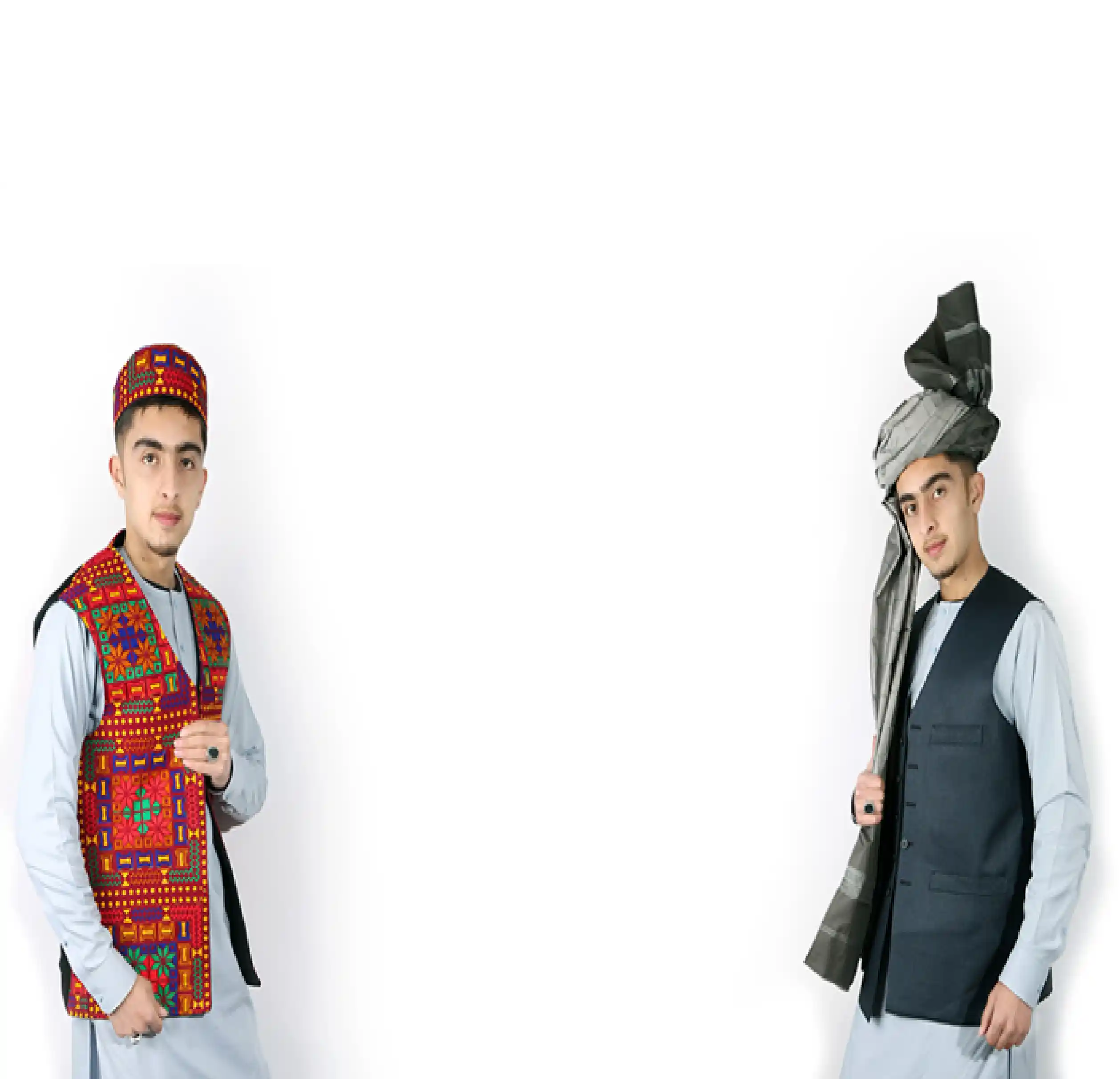
Afghan Men’s Traditional Dress – Pride & Heritage
The Afghan men’s traditional dress is a beautiful reflection of Afghanistan’s culture, customs, and historical dignity. It is not only worn for comfort and simplicity but also represents the artistry, taste, and national identity of the Afghan people. For centuries, Afghan men have worn these traditional clothes, and although styles have evolved over time, their cultural value has remained unchanged.
The main parts of Afghan men’s clothing are the Perahan and Tunban. The Perahan is a long shirt usually made from soft cotton or light fabric, while the Tunban (trousers) are wide and comfortable. Together, they form the foundation of the Afghan outfit — practical, graceful, and in harmony with Afghan tradition.
Over the Perahan, men often wear an elegant waistcoat (wasakat). The waistcoat adds charm and respect to the dress. It is often handmade with delicate embroidery using white or colored silk threads on velvet or cotton fabric. In special occasions, silver or golden threadwork is also used, showing the richness of Afghan craftsmanship.
A turban (pagri) or cap (kholai) is another important part of Afghan attire. The turban represents honor and dignity. Each region has its own style — such as the green turban of Kandahar, the white of Nangarhar, and the blue of Badakhshan. In northern regions, traditional embroidered caps are more common and hold local cultural value.
Shoes complete the outfit — often made from leather or velvet with beautiful hand-stitched designs. These shoes are both durable and artistic, reflecting Afghan skill and creativity.
The Afghan men’s dress is not just ordinary clothing; it is a living symbol of culture, history, respect,and national pride. It is commonly worn during weddings, Eids, religious ceremonies,and cultural gatherings. The beauty of this attire lies in how it connects every Afghan — whether living in a city or a village — with his heritage and identity.
Regional Variations
Different regions of Afghanistan have unique variations in their clothing. In Kandahar and Helmand, men wear heavier fabrics, large turbans, and longer Perahans. In Kabul and Mazar, the materials are softer, the embroidery finer, and the waistcoats more stylish. In Herat, traditional colors and thin fabrics are preferred, while in Nangarhar and Laghman, white clothes and turbans symbolize purity and respect.Overall, the Afghan men’s traditional dress is a proud emblem of the nation’s cultural heritage. It reflects the Afghan spirit of honor, modesty,and pride, linking past generations with the present. Every Afghan who wears this attire carries with him a part of his nation’s history, tradition, and identity.
Afghan Turban – Symbol of Honor and Tradition
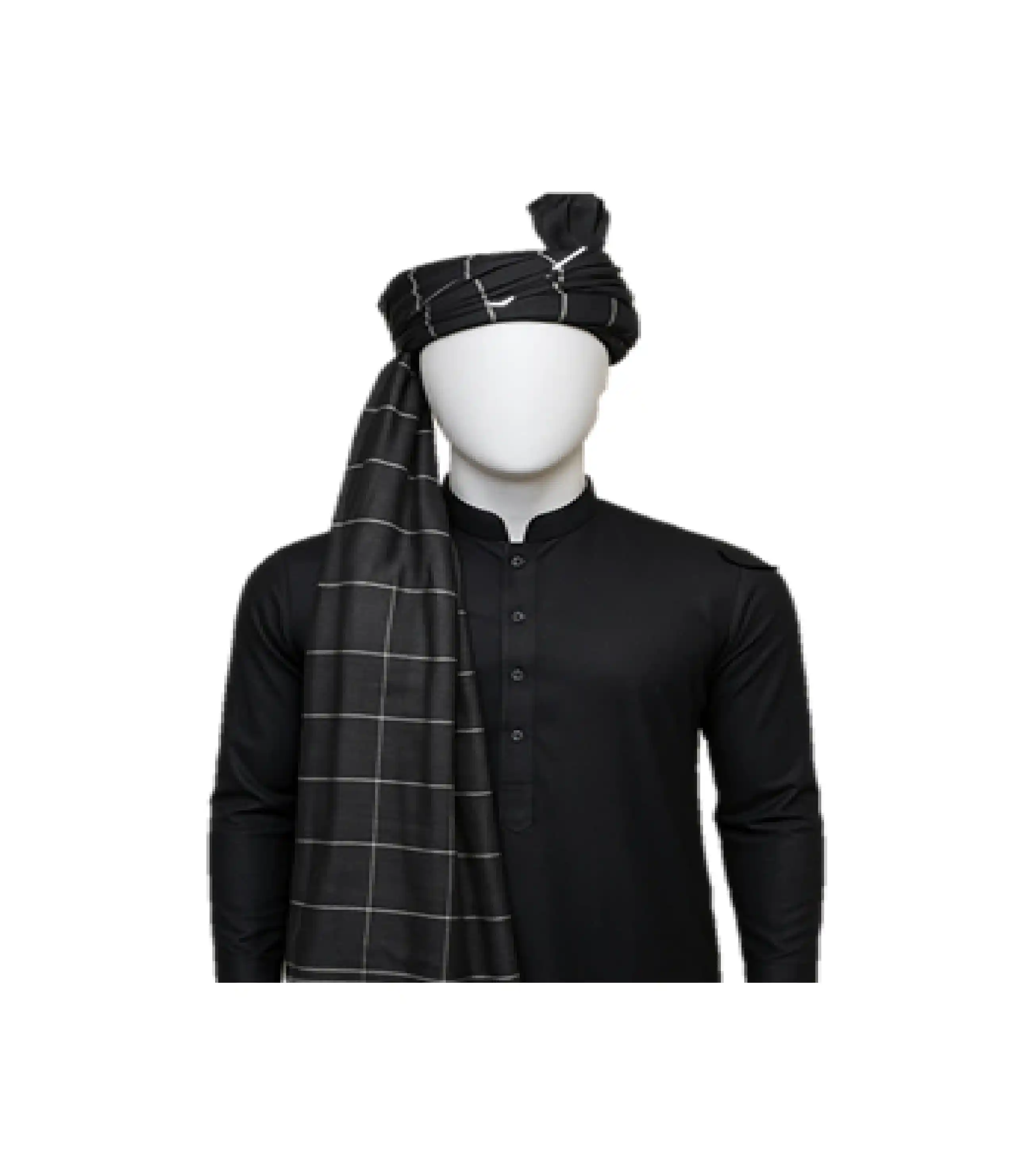
The Afghan Turban, also known as Lungi or Pagrai, is one of the most respected and traditional symbols of Afghan culture. Worn by men across Afghanistan, it represents honor, pride, and spiritual dignity. Made from a long strip of cotton or silk cloth—usually between 3 to 7 meters—the turban is skillfully wrapped around the head, with one end often hanging over the shoulder. It comes in different colors and styles, such as black, white, or checkered patterns, each reflecting regional identity and personal taste.
Culturally, the Afghan turban is a mark of respect, wisdom, and leadership. It is commonly worn during weddings, religious ceremonies, tribal gatherings, and official events. In southern provinces like Kandahar and Helmand, large black turbans are popular, while in Kabul and Logar, white ones are more common. In the east, men prefer patterned turbans, and in the north, shorter, neatly folded styles are seen.
More than a head covering, the turban serves as a symbol of Afghan nobility and heritage, carrying deep cultural and historical significance. Every fold of the Afghan turban tells a story of honor, tradition, and unity, linking generations of Afghans to their proud ancestral roots.
Karakul Hat – Afghan Traditional Cap
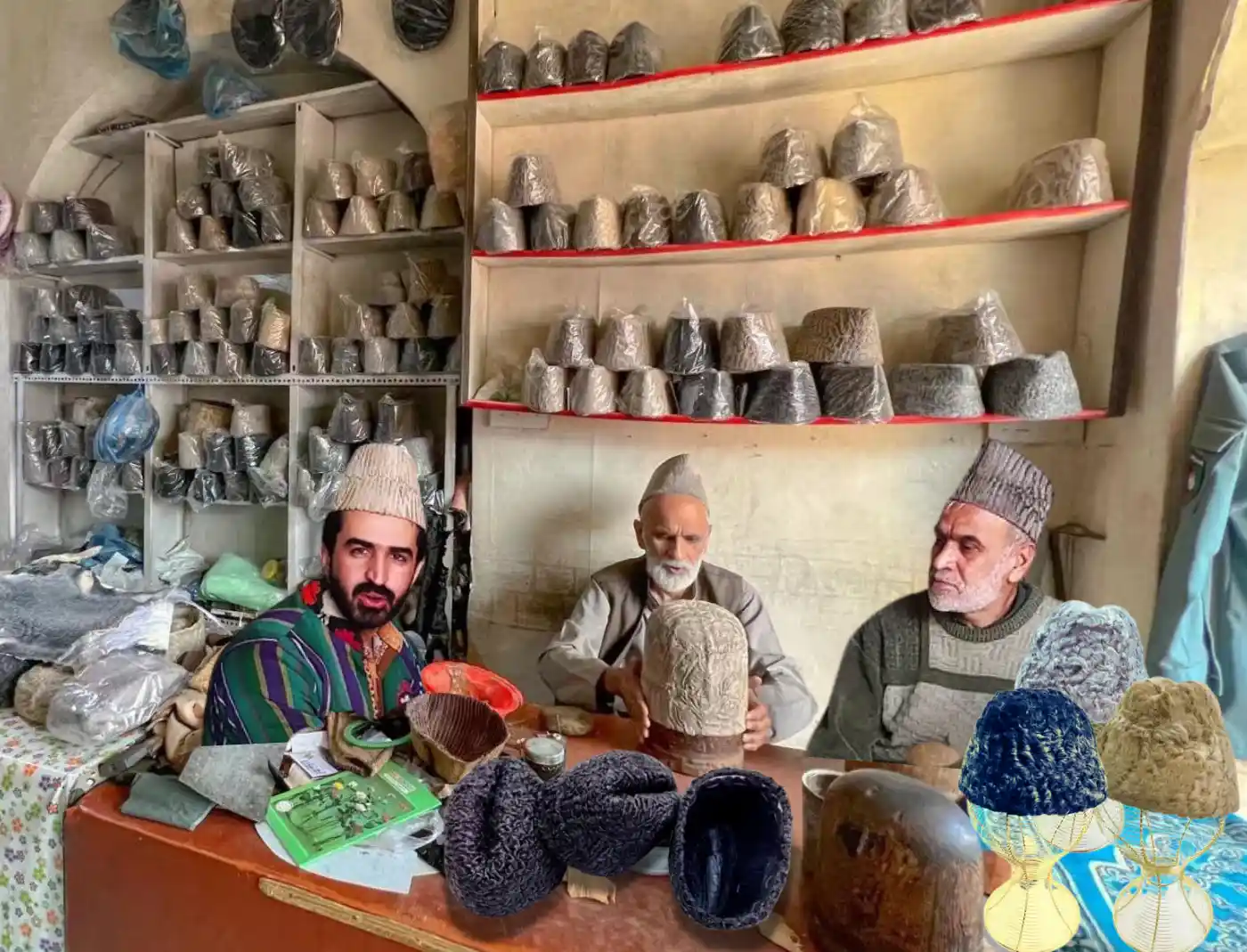
The Karakul Hat, also known as the Afghan cap, is a proud symbol of Afghan identity, dignity, and tradition. Made from the soft fur of the Karakul sheep, it has a shiny, textured surface and a cylindrical shape with gently folded sides, giving it a noble appearance. Usually found in gray, black, or brown colors, this lightweight and durable hat is suitable for all seasons and is often worn slightly tilted for elegance.
Worn by Afghan men during official gatherings, weddings, and religious ceremonies, the Karakul hat represents respect, wisdom, and leadership. In Kabul and Mazar, it is paired with Perahan Tunban and velvet waistcoats, while in northern Afghanistan it is locally handcrafted and treasured as a cultural heritage.
More than a piece of clothing, the Karakul hat is a living symbol of Afghan pride that connects generations through shared values of honor and national identity.
Pakol – Afghan Traditional Cap
.webp)
The Pakol is a traditional soft woolen cap widely worn by Afghan men, especially in the eastern and northern regions of Afghanistan. Made from warm, handwoven wool, it is round in shape with a rolled-up edge that forms a thick band around the head. The flat, soft top can be adjusted to fit comfortably, making it ideal for both cold and moderate climates. Pakols are commonly found in earthy tones such as brown, gray, beige, and black.
Culturally, the Pakol represents simplicity, strength, and Afghan identity — symbolizing the traditional lifestyle of mountain communities and freedom-loving tribes. It is often worn with Perahan Tunban and woolen shawls, particularly in provinces like Nuristan, Kunar, Panjshir, and Badakhshan.
More than just a cap, the Pakol is a proud emblem of Afghan heritage and resilience, reflecting the warmth and authenticity of Afghan culture.
Kandahari Khwali
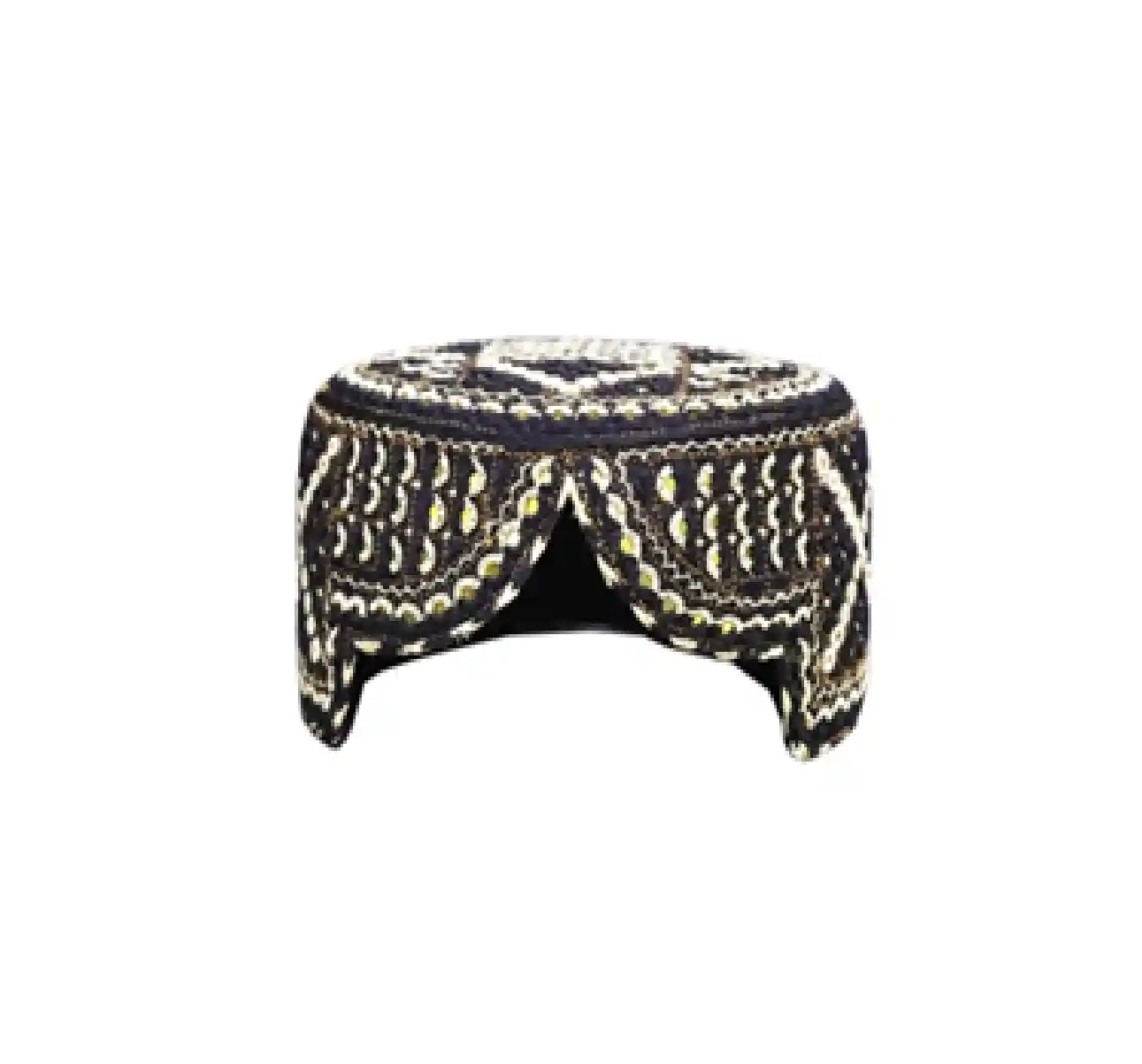
Khwali is a traditional Afghan headwear commonly worn in Kandahar and the southern regions of Afghanistan. Made from soft and lightweight fabric, it is wrapped around the head in a distinct cultural style that symbolizes respect, dignity, and local identity. Khwali is used in daily life as well as in traditional gatherings, ceremonies, and tribal councils. It comes in various colors and sizes, with black, grey, and green being the most common. This headwear represents the rich heritage and long-standing traditions of Kandahari and Afghan culture.
Khamak Jami – Traditional Afghan Men’s Garment
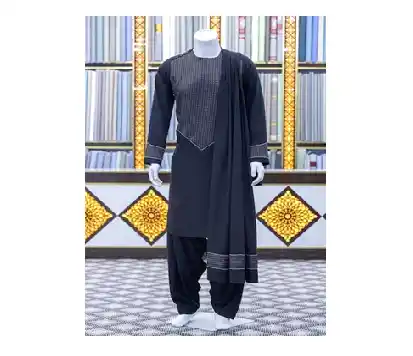
Khamak Jami is a traditional Afghan garment worn by men, especially in Kandahar and the southern regions of Afghanistan. Made from soft and lightweight fabrics like cotton or wool, it is designed to be long and comfortable, suitable for daily wear as well as cultural and ceremonial occasions. The garment typically comes in simple, traditional colors such as black, white, khaki, or blue, and sometimes features embroidery or regional patterns. Khamak Jami represents Afghan men’s dignity, cultural identity, and heritage, reflecting the rich traditions and customs of Kandahari and southern Afghan communities.
Afghan Shawl – Traditional Garment of Dignity
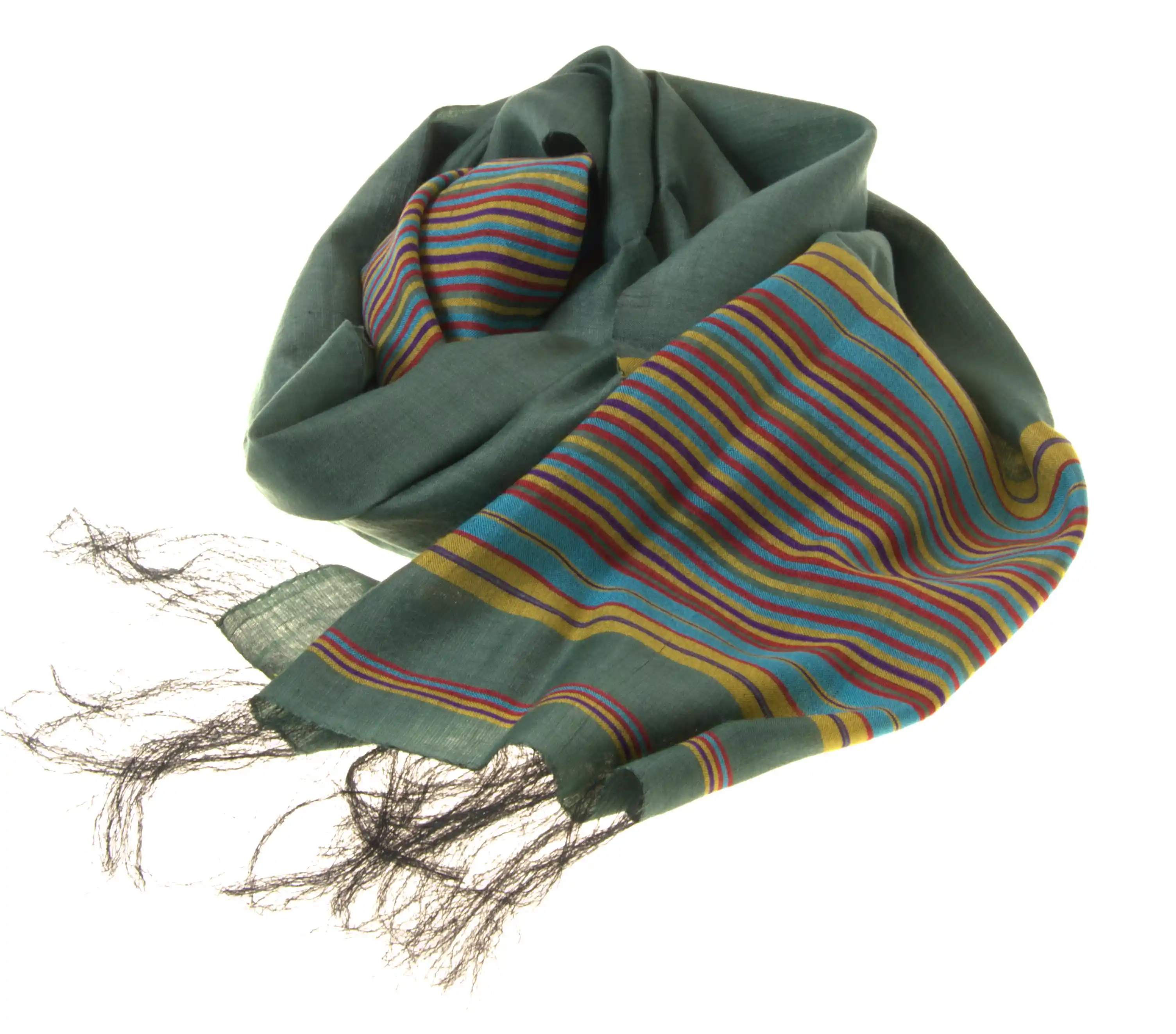
Culturally, the shawl symbolizes modesty and honor, commonly worn during religious ceremonies, weddings, or official gatherings. In colder regions like Kabul, Herat, and Mazar, thick woolen Patous are favored, while in warmer areas, lighter cotton Chadars are preferred.
More than a simple covering, the Afghan shawl represents the timeless grace, hospitality, and pride of Afghan tradition, reflecting the warmth and respect deeply rooted in Afghan culture.
Traditional Afghan Footwear
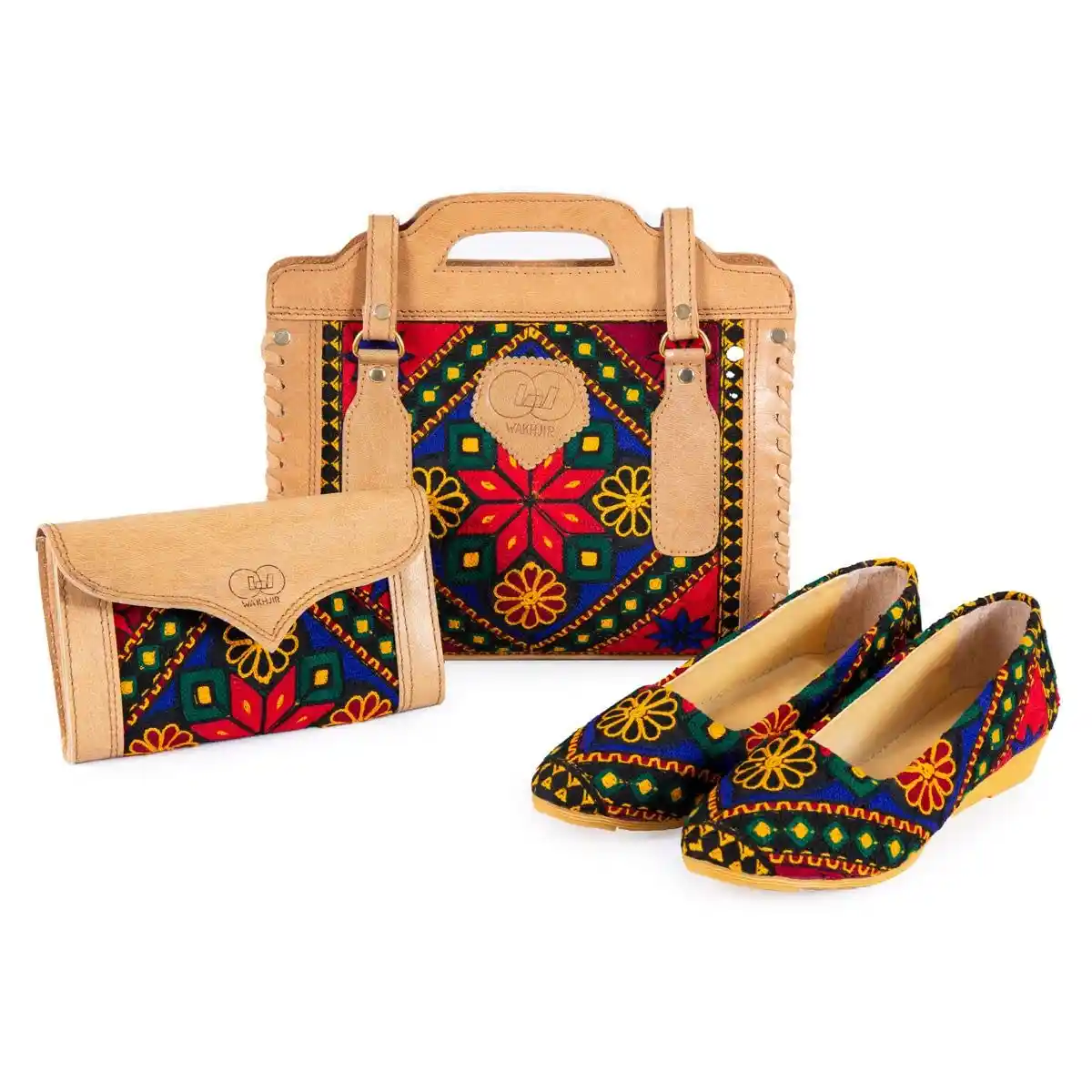
The Peshawari Chappal, on the other hand, is a more practical and comfortable sandal made from strong leather with a thick sole and cross-strap design. It is widely worn by Afghan men in everyday life due to its durability and comfort.
Both types of footwear come in natural leather tones like brown, tan, and beige, often reflecting regional variations in style and craftsmanship. Beyond functionality, these shoes are a proud part of Afghan identity — representing a blend of art, culture, and tradition that has been passed down through generations.
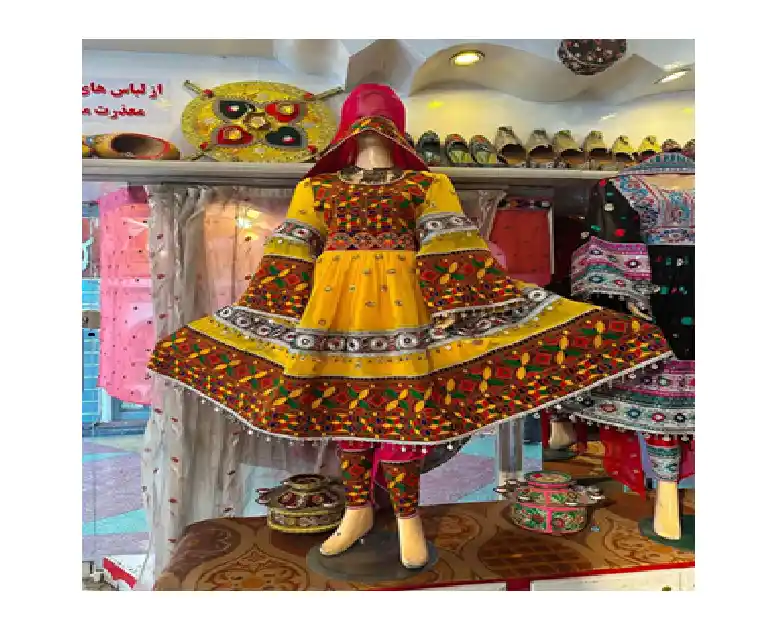
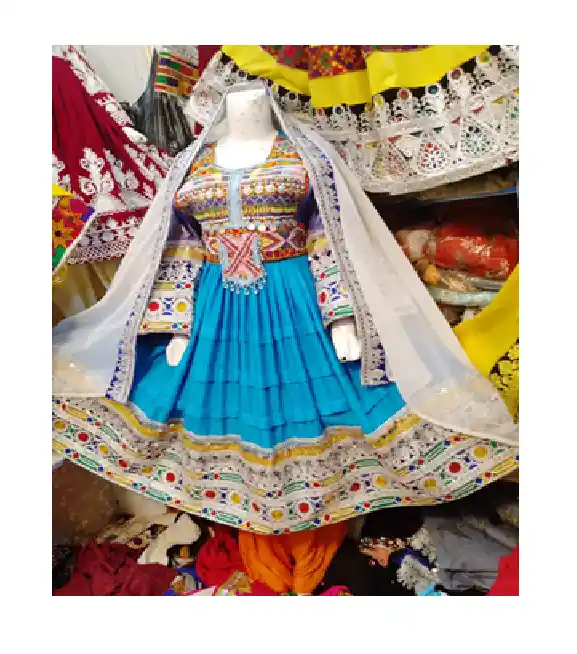
✨ Afghani Dress – The Pride of Afghan Culture
Afghani dress represents the rich cultural heritage and artistic traditions of Afghanistan. These dresses are famous worldwide for their vibrant colors, intricate embroidery, and unique regional designs.
Each Afghan dress is a work of art — carefully handcrafted by skilled artisans who use colorful threads, mirrors, beads, and fine stitching to create eye-catching patterns.
🌸 Main Features:
- 🌟 Embroidery & Mirror Work: Every dress includes detailed hand embroidery and small mirror decorations that reflect Afghan craftsmanship.
- 🌟 Bright Colors: Red, green, blue, and golden tones are common — symbolizing joy, tradition, and celebration.
- 🌟 Regional Styles:
- Kandahar & Helmand: Bold geometric embroidery and heavy threadwork.
- Herat & Badghis: Soft floral designs and fine details.
- Mazar & Kabul: Modern touches with classic Afghan patterns.
- Accessories: Usually paired with matching jewelry, scarf (chadar), and embroidered shoes for a complete traditional look.
💫 Cultural Importance:
Afghani dresses are worn during weddings, Eid celebrations, Nowruz (New Year), and cultural festivals. They symbolize elegance, identity, and national pride — connecting modern style with centuries of tradition.
Traditional Afghan Headwear
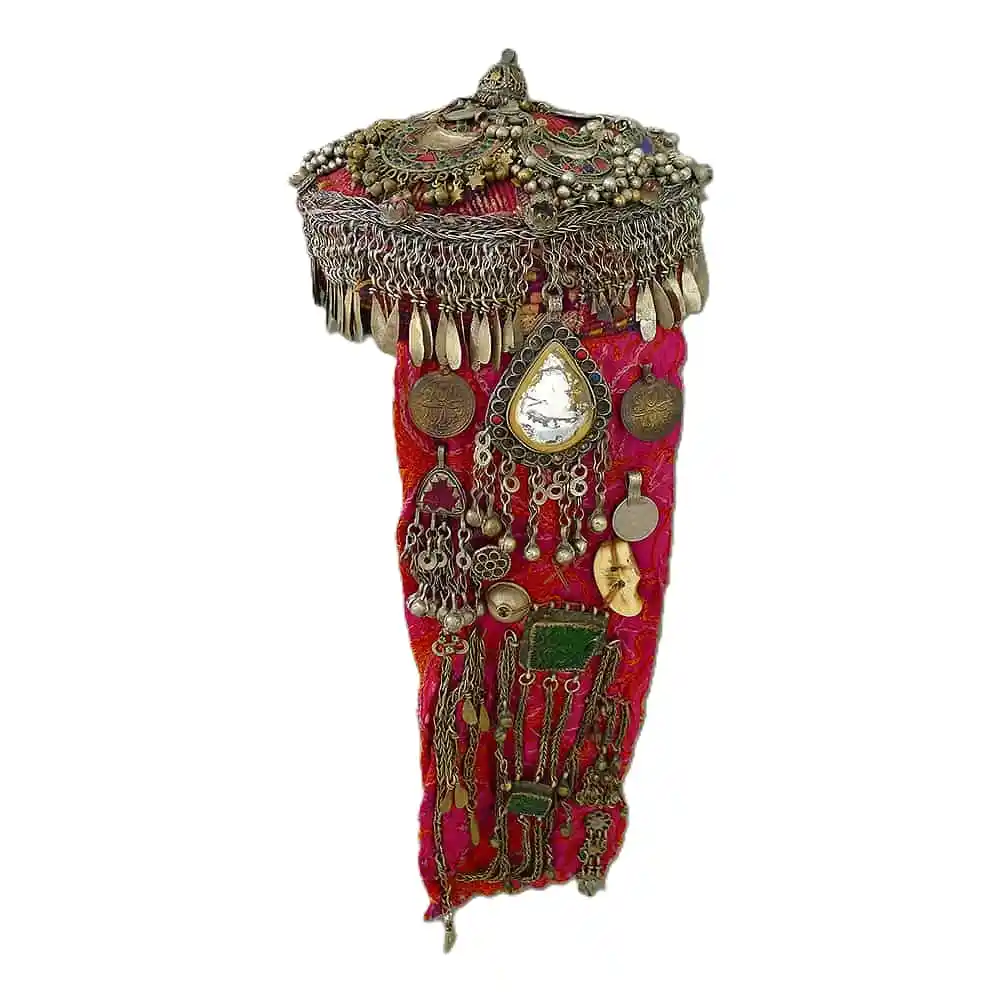
The Traditional Afghan Headwear is a remarkable example of Afghanistan’s rich culture, craftsmanship, and artistic heritage. One of the most iconic pieces of Afghan women’s attire is the traditional embroidered cap, often adorned with colorful beads, mirror work, and metallic ornaments. Handcrafted by skilled Afghan artisans, this cap reflects both elegance and cultural pride.
Its upper part is usually made from bright fabrics such as red, pink, or green, beautifully embroidered with intricate geometric and floral designs. The sides are decorated with silver-colored coins, small mirrors, and dangling metal chains that create a soft jingling sound when the wearer moves — symbolizing grace and festivity.
Traditionally, this headpiece is worn by Afghan women during special occasions such as weddings, cultural festivals, and traditional dances, often paired with vibrant Afghan dresses and jewelry. Each region of Afghanistan has its own variation in design and color, representing the local identity and artistic traditions of its people.
Beyond its decorative purpose, the Afghan headwear holds deep cultural significance — it embodies the heritage, creativity, and timeless beauty of Afghan women passed down through generations.
Afghan Female Necklace
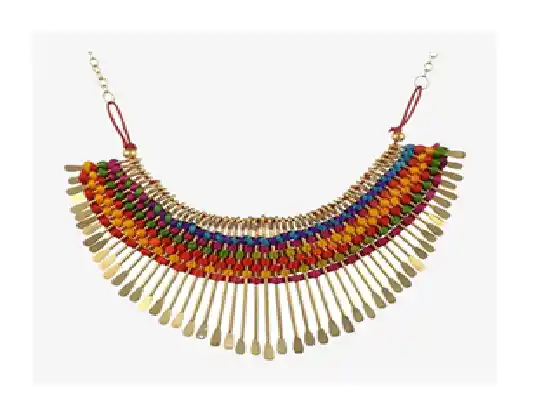
The Afghan female necklace is an important part of traditional attire, symbolizing beauty, cultural identity, and social status. These necklaces are worn in daily life, at festivals, and during weddings, often made from silver, gold, semi-precious stones, beads, and sometimes adorned with coins or embroidery. Designs vary by region: Pashtun women wear colorful and decorative necklaces, Hazara women prefer delicate and intricate styles, and in northern regions, layered tribal necklaces are common. Beyond decoration, these necklaces reflect social standing, heritage, and the rich traditions of Afghan women’s culture.
Gandi Afghan Clothes
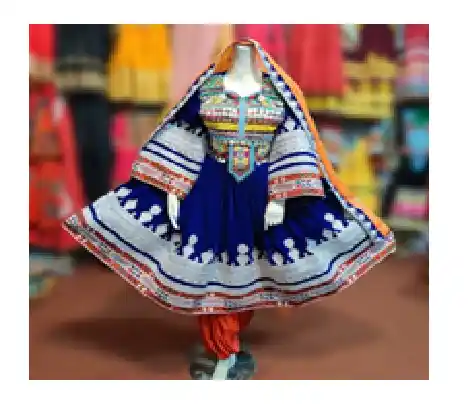
Gandi Afghan female clothes are traditional garments worn by women in rural areas of Afghanistan, representing the distinct cultural identity of each region. These outfits are usually handmade with colorful fabrics, featuring elaborate embroidery, mirror work,anddecorative patterns that often tell stories or symbolize local traditions. A long dress, such as a Firaqah or Firaqahx is paired with a Teka or shawl that covers the head and shoulders, while ornamental belts, jewelry, and sometimes anklets complete the look. Worn for daily life, family gatherings, festivals, and special ceremonies, Gandi clothes reflect both practical comfortandthe elegance of Afghan heritage, preserving centuries-old craftsmanship and cultural pride.
The Traditional Afghan Hijab
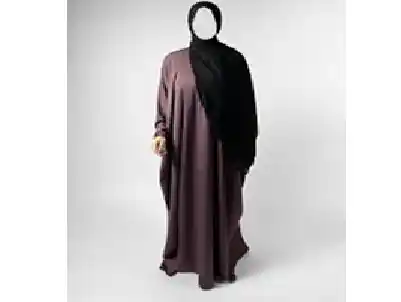
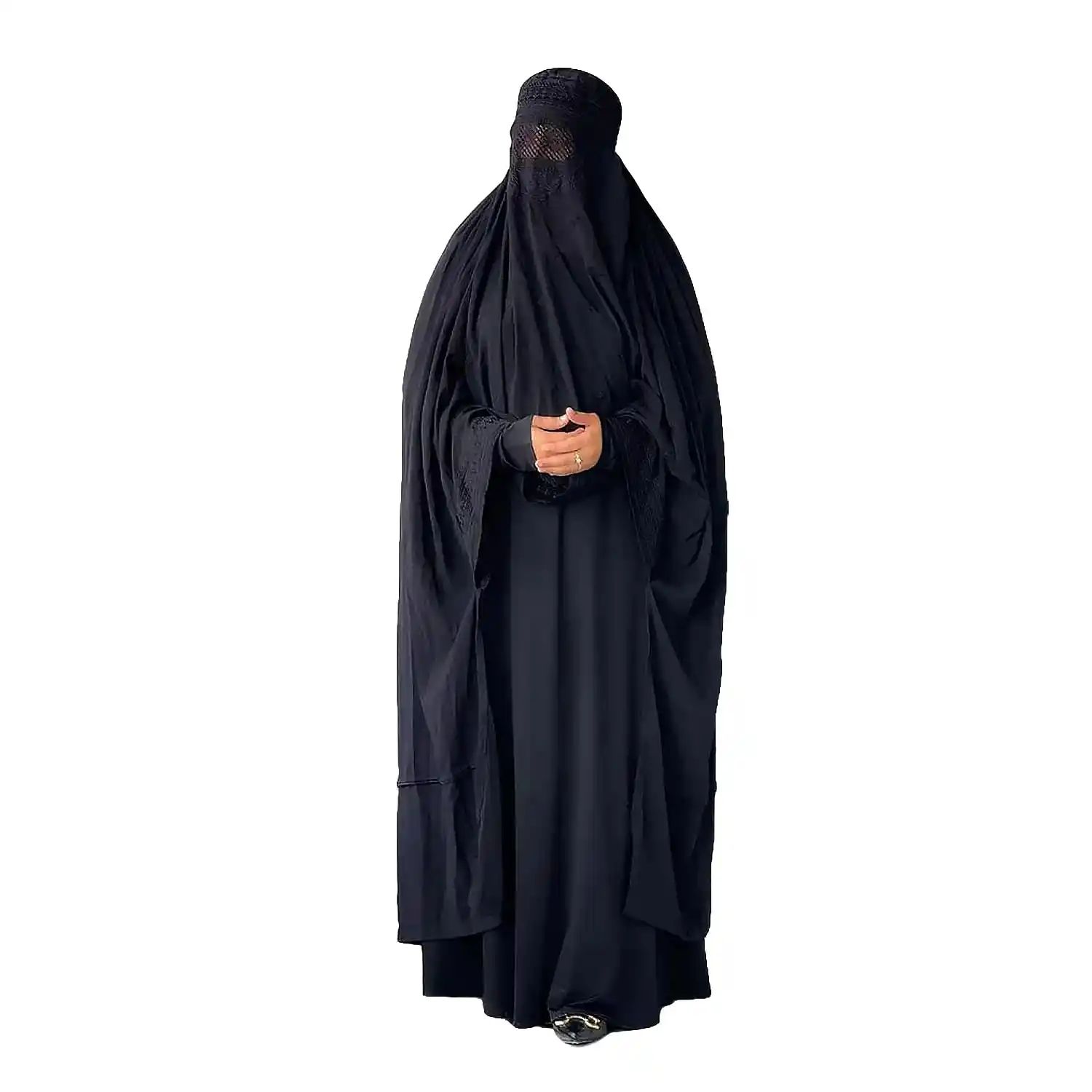
The Traditional Afghan Hijab beautifully represents the modesty, dignity, and cultural identity of Afghan women. Among the most well-known forms of hijab in Afghanistan are the Abaya and the Burqa, each reflecting a unique blend of faith, tradition, and style.
The Abaya is a long, loose-fitting garment that covers the body while leaving the face visible. Usually made from soft, flowing fabric in colors like black or brown, it allows comfort and graceful movement while maintaining modesty. It is often worn by Afghan women in cities as a symbol of modern elegance and devotion.
In contrast, the Burqa is a more traditional form of Afghan hijab that provides full-body coverage, including a mesh screen over the eyes. Commonly seen in blue or grey shades, the Burqa holds deep cultural significance and has been worn by Afghan women for generations as a symbol of respect and purity.
Together, the Abaya and Burqa express the timeless values of Afghan womanhood — faith, honor, and the enduring beauty of cultural heritage.
Khussa Shoes – Embroidery Art
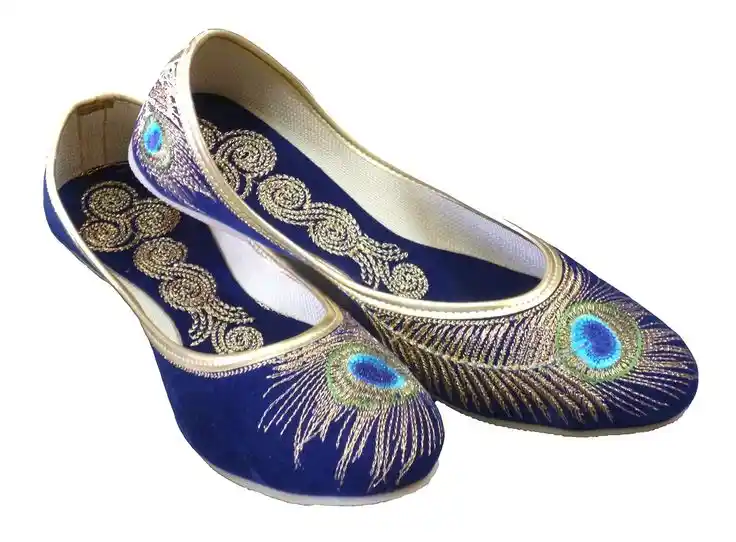
Khussa shoes, also known as shoes or Payzar, are a type of traditional embroidered flat footwear commonly worn by women in Afghanistan, Pakistan, and parts of India. These shoes, like the ones pictured, are typically handcrafted and feature intricate designs, often with embroidery or beadwork on the upper part. They are known for having a pointed, curved toe and are often made from leather or textiles.
The designs often incorporate vibrant colors and patterns that reflect the cultural heritage of the region. While some are worn for everyday use, more elaborately decorated styles are considered ceremonial and are worn for special occasions like weddings and festivals.
🌍 Afghan Attire: A Living Cultural Legacy
Every stitch, each fold of the turban, every mirror on the dress tells a story of Afghan resilience, artistry, and deep-rooted pride.